Overview


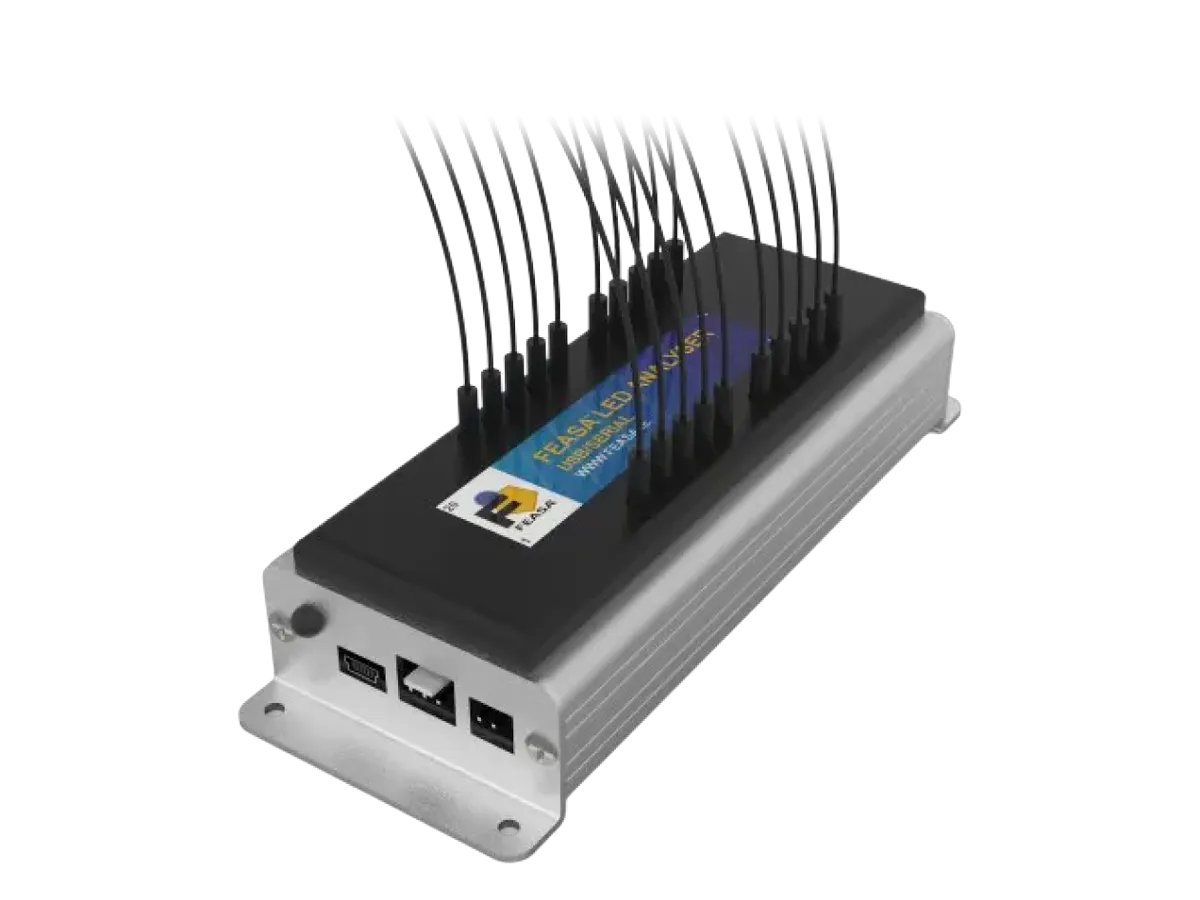
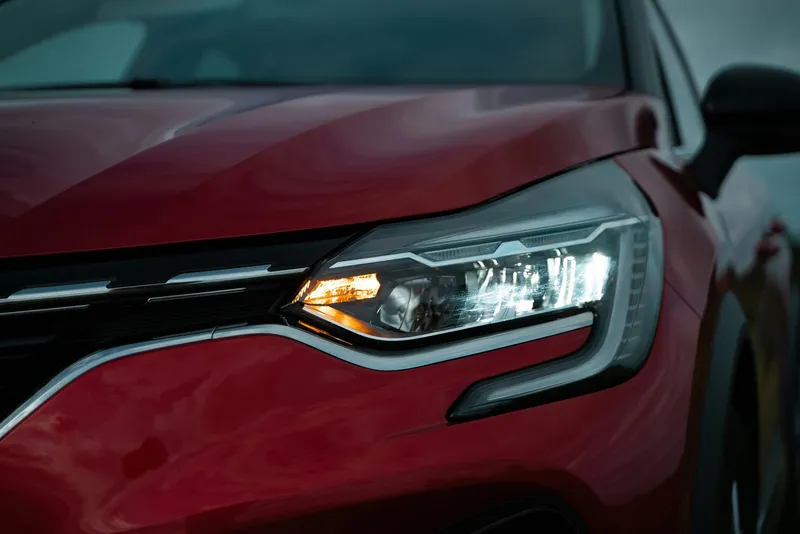
The Feasa High Brightness LED Analyser was developed specifically for testing automotive headlights and matrix LED modules in production. Where standard measurement devices could saturate at high light levels, the Feasa High Brightness LED Analyser tests consistently even in the most demanding applications.
Many Modern automotive lighting combines extremely high brightness with tightly packed LEDs, creating challenges for conventional test equipment. The High Brightness LED Analyser delivers reliable measurements even where LEDs are spaced little more than a millimetre apart.
Available in both Functional and In-Circuit Test configurations, it integrates easily into automated production systems, delivering reliable measurements throughout high-volume automotive lighting manufacture.
Built for headlight production. Trusted globally.

Built for high-intensity LED testing
Handle the extreme brightness levels found in automotive lighting without saturating, while maintaining precise color and intensity measurements.

Comprehensive output parameters
Outputs include Hue, Saturation, Intensity, Dominant Wavelength, CCT, CIE xy and CIE u'v'.

Complete software package
The full Feasa Software Suite is included as standard, with DLL and programming examples for LabVIEW, C, C++, C# and Python.

Built for production integration
USB and RS232 interfaces are standard, with up to 30 analysers daisy chained from a single port.

Proven in production
- Millions of LEDs tested every day using Feasa products
- Worldwide usage on production lines by leading manufacturers

Direct engineering support
From fixture integration and setup to troubleshooting, our technical team supports you throughout deployment.
Applications
Where our High Brightness Analyser is commonly used.


Technical Specifications
| Parameter | Value | Notes |
|---|---|---|
| Channels | 3, 5, 6, 10, 20 | Simultaneous measurement |
| Wavelength range | 460–650 nm | |
| Dominant wavelength accuracy | ±2 nm @ 590 nm | |
| CCT accuracy | ±200K @ 2856K | |
| CIE xy accuracy | ±0.01 @ x=0.33, y=0.33 | |
| Resolution (chromaticity) | 0.0001 | |
| Repeatability — wavelength | ±1 nm | |
| Repeatability — CCT | ±50K @ 2856K | |
| Repeatability — CIE xy | ±0.0015 | |
| Supply voltage | 5.0V | |
| Supply current | 220 mA | |
| Dimensions | 104.5×54×39 mm / 145×54×39 mm (FB) · 100×29×29 mm / 140×29×29 mm (IB) | |
| Fiber length | 0.6 m | Per channel |
| Fiber diameter | 1.0 mm | Plastic optical fiber |
| Min. bend radius | 15 mm | |
| Operating temperature | 0–50°C | |
| Interface | USB, RS232, Daisy Chain, Ext. Trigger (FB) · RS232, 20-pin (IB) | |
| Compliance | CE, RoHS | |
| Model / order codes | 3FB·5FB·10FB·20FB / 3iB·5iB·10iB·20iB |
Feasa Software Suite

Included with every analyser
- Feasa Terminal — Direct command-line control and diagnostics
- Feasa User Software — Setup, calibration and pass/fail configuration
- Feasa Test Software — Production-line test execution and logging
- Feasa User Cal — User-side calibration management
- DLL/SDK — Programming examples in LabVIEW, C, C++, C#, Python
- ICT variant (IB) support — Test models for Agilent i3070 and Genrad/Teradyne platforms
Downloads and Resources